Creative and the Concepts Map
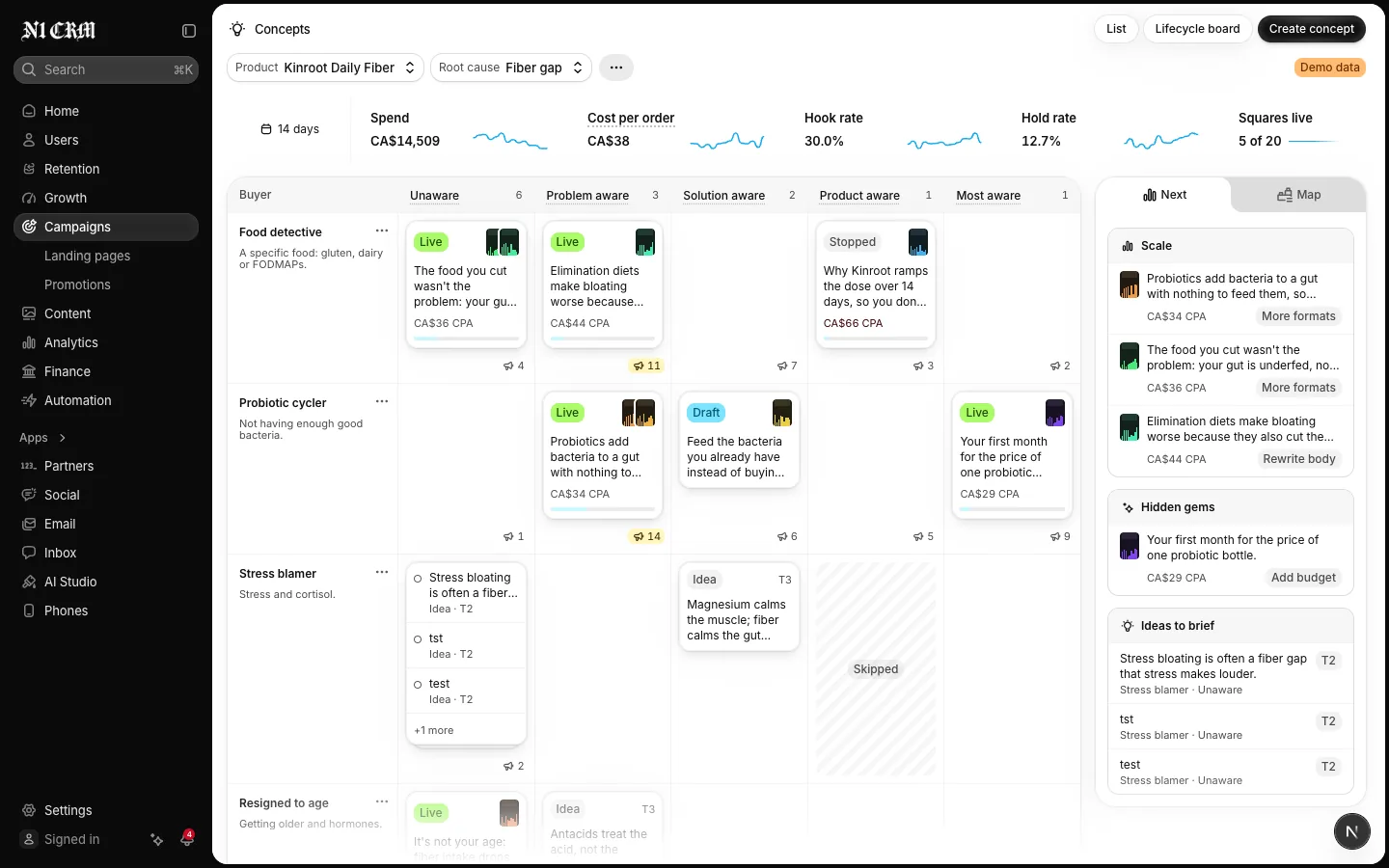
Every concept the store has tried sits on one map, by buyer and by how aware that buyer already is. The empty squares are the next brief.
The Concepts Map lays buyers down the side and awareness across the top: unaware, problem aware, solution aware, product aware and most aware. Each square holds the concepts aimed there, with whether they are live, drafted, stopped or skipped, and the cost per order each one earned.
Beside the map, the Next panel reads the same figures and sorts them into what to scale, the hidden gems that worked on little budget, and the ideas waiting to be briefed. A square with nothing in it is a question nobody has asked the market yet.
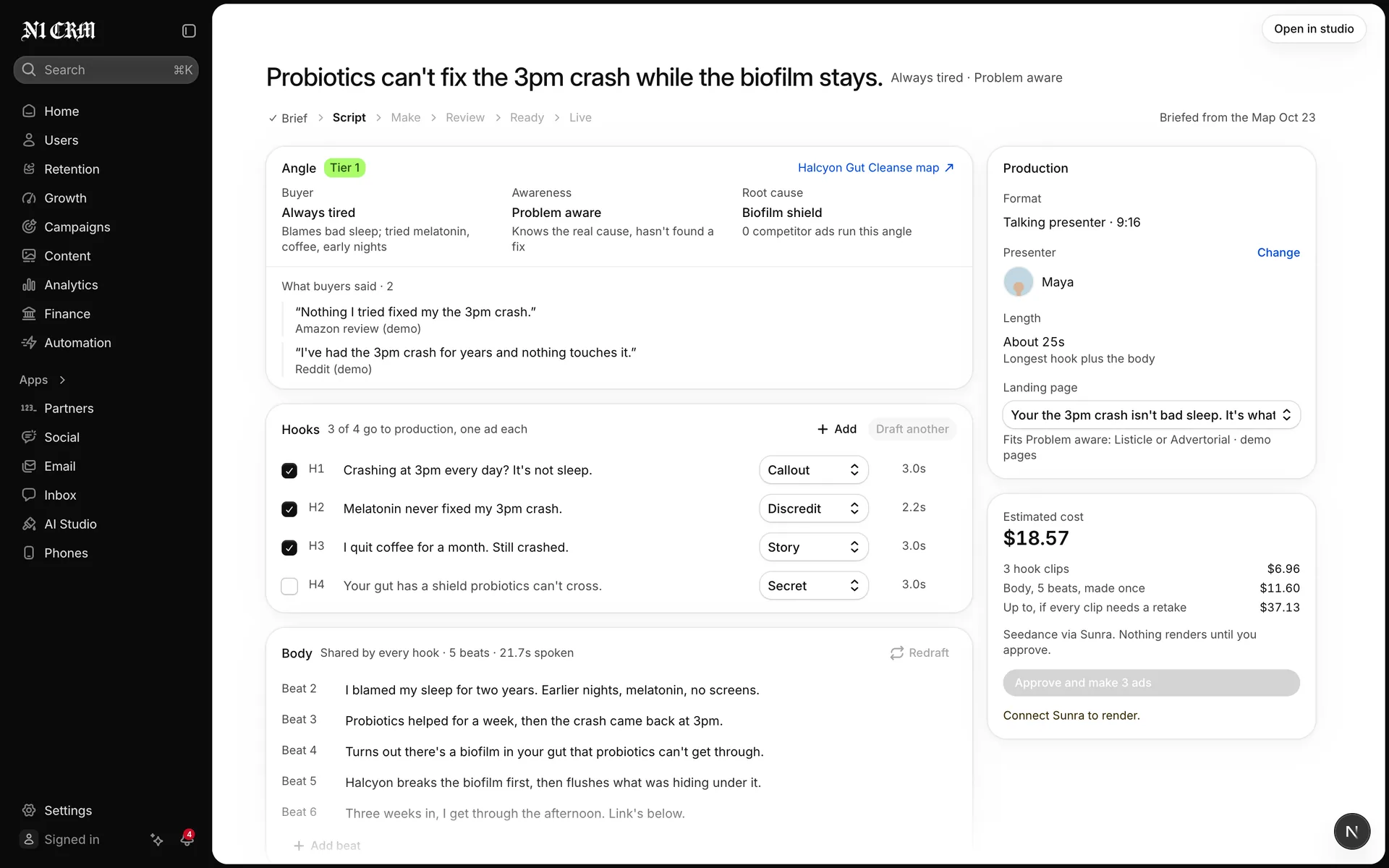
A brief starts from a square. It carries the buyer, the problem and the stage, then the hooks and one shared body, so every ad made from it argues the same thing in a different first line.
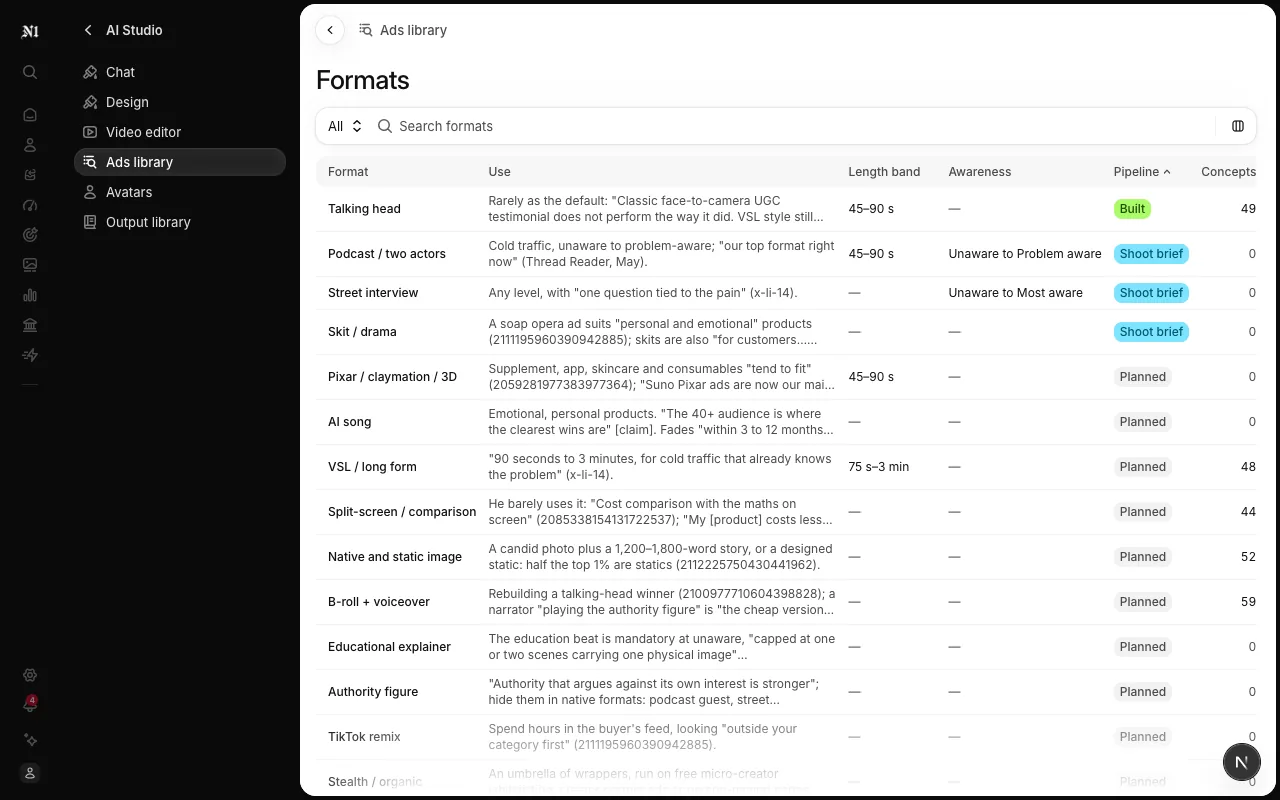
The studio turns a script into a captioned ad in one session, and the format catalogue says which formats suit which stage, from a talking head to a split-screen comparison, with the beats, assets and checks each one needs.
What competitors are running is kept in the ads library, with how long each ad has lasted and what it says, so a new angle is checked against the market before money goes into it.
What’s included
- The Concepts Map: buyers by awareness stage
- Scale, hidden gems and ideas to brief
- Briefs with hooks and one shared body
- Script to captioned ad in one session
- A catalogue of 14 ad formats
- An ads library of competitor ads
In the product
Want this for your store?
Tell us what you sell and what takes the most time.